
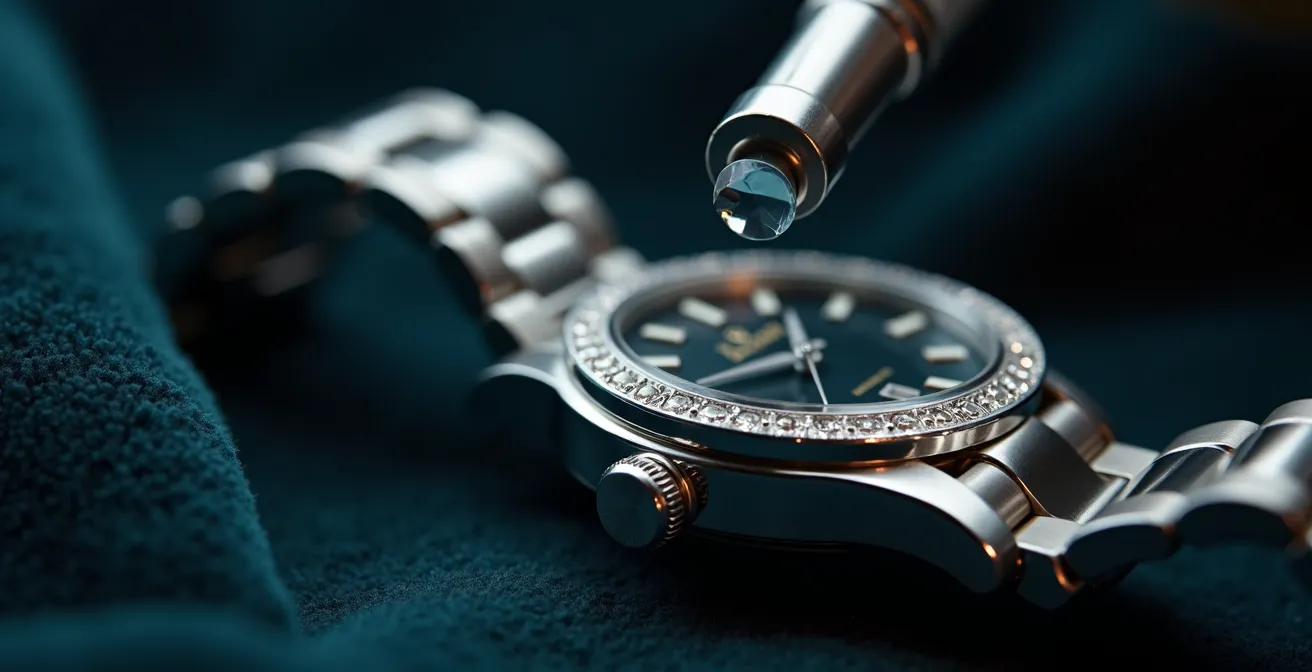
The luxury watch industry operates under a carefully curated veil of heritage narratives and craftsmanship mystique. Yet beneath the polished marketing lies a complex ecosystem of valuation mechanisms, authentication protocols, and market dynamics that brands rarely illuminate for consumers. These hidden frameworks determine why seemingly identical gemstones command vastly different prices depending on whether they adorn a necklace or a watch bezel, and why certain timepieces appreciate while others depreciate despite comparable materials and movements.
Understanding these insider realities requires looking beyond brand-controlled information channels. While professional watchmaking education programs, such as offered by objectifhorlogerie.com teach technical horology, they seldom expose the gemological discrepancies, liquidity constraints, and systematic biases that shape secondary market valuations. This knowledge gap creates both confusion for buyers and opportunities for informed collectors.
The journey from industry secrets and hidden value mechanisms to the sophisticated frameworks collectors use to position timepieces within jewellery portfolios reveals uncomfortable truths about certification double standards, investment mythology, and cultural prejudices embedded in pricing structures. These insights empower buyers to evaluate watches using jewellery-world standards rather than relying solely on brand narratives.
Essential Truths About Timepiece Jewellery
- Watchmakers apply different gemological certification standards than traditional jewellers, creating valuation arbitrage opportunities for identical diamond quality
- Luxury watches function more like art investments than liquid assets, with transaction costs reaching 15-20% versus 1-3% for gold bullion
- Gender-coded design biases cause mechanically identical movements to command dramatically different prices, creating strategic collecting opportunities
- Professional authentication employs forensic techniques beyond brand verification, including XRF spectrometry and microscopic finish analysis
- Sophisticated collectors use portfolio allocation frameworks balancing blue-chip classics, emerging independents, and speculative pieces
Why Identical Gemstones Command Different Prices in Watch Cases
The gemstone authentication standards governing fine jewellery and luxury watchmaking operate as parallel universes with remarkably little overlap. When a traditional jeweller sets a diamond in a ring or necklace, independent gemological certification from institutions like GIA becomes virtually mandatory for pieces above certain price thresholds. This third-party verification provides buyers with detailed documentation of the four Cs—cut, clarity, color, and carat weight—graded according to universally recognized standards.
Watchmakers, by contrast, rarely submit their set stones for independent certification. Instead, they rely on in-house gemological teams and proprietary quality standards. This certification gap creates pricing opacity where buyers must trust brand assertions about stone quality without the independent verification that traditional jewellery purchasers expect. The discrepancy becomes particularly pronounced when comparing certification costs, as IGI certification runs 12% lower than GIA for identical diamonds, yet watch brands often bypass both systems entirely.
The technical challenges of gem-setting in watch cases provide partial justification for these divergent practices. Curved bezels, integrated bracelet designs, and the three-dimensional architecture of watch cases require exceptional precision in stone selection and placement. Each gem must be individually calibrated to fit complex geometries while maintaining visual consistency across hundreds of tiny stones in pavé settings.
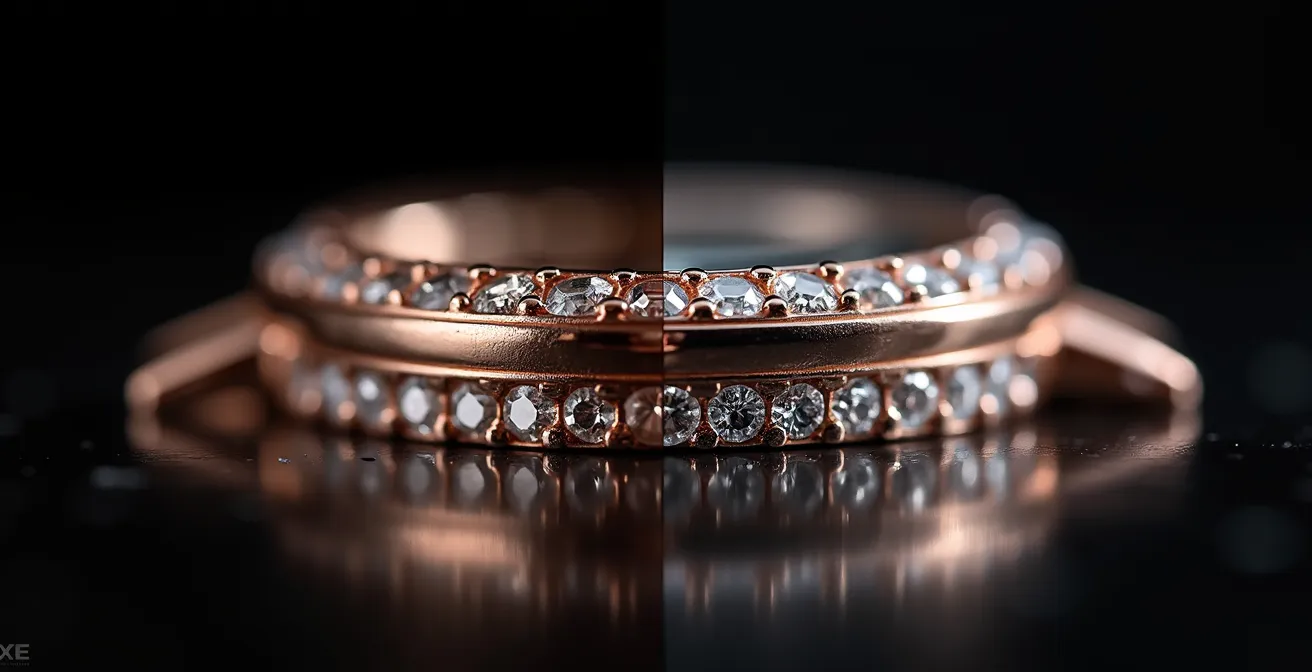
This complexity gives rise to what industry insiders call the “integrated design premium”—a markup justified by the technical difficulty of setting stones in mechanical objects subject to shock, vibration, and daily wear. Unlike static jewellery pieces, gem-set watches must maintain structural integrity while housing precision movements. Auction house specialists evaluate these pieces differently than traditional jewellery, focusing on setting security, visual flow across curved surfaces, and the rarity of specific stone configurations within a manufacturer’s historical production.
Gem-Set Watch Pricing Analysis at Geneva Watch Fair
At Watches and Wonders Geneva 2024, industry experts noted that gem-setting in watches is regarded as métiers d’arts, with each stone requiring individual selection, cutting, polishing and hand-setting. However, unlike traditional jewelry, watches rarely provide GIA reports for their set stones, creating pricing opacity. The paradox: identical quality diamonds can command 30-50% premiums when integrated into watch designs despite lacking independent certification.
The resulting market operates on brand reputation rather than transparent gemological data. A Cartier diamond and a Patek Philippe diamond might demonstrate identical cut quality under magnification, yet their valuations follow completely different frameworks. The Cartier stone likely comes with detailed gemological documentation given the brand’s jewellery heritage, while the Patek stone relies on the manufacture’s reputation for excellence without external certification. Collectors willing to conduct independent gemological assessments can sometimes identify arbitrage opportunities where watch-set stones of exceptional quality trade at discounts to their jewellery equivalents due to this documentation gap.
| Aspect | Traditional Jewelry | Luxury Watches |
|---|---|---|
| Certification Standard | GIA reports standard | In-house certificates common |
| Transparency | Full 4Cs disclosure | Limited specification details |
| Price Premium | Based on certified quality | Integrated design premium |
| Resale Documentation | Independent lab reports | Brand authentication only |
This dual-standard system creates both risks and opportunities. Buyers paying premium prices for gem-set watches without independent certification assume greater risk in the secondary market, where the absence of GIA documentation can complicate resale. Conversely, knowledgeable collectors who can independently verify stone quality may discover exceptional value in pieces where brands used superior stones but never pursued external certification.
The Liquidity Illusion Behind ‘Investment Timepiece’ Marketing
The narrative surrounding watches as investment vehicles has intensified over the past decade, with certain manufacturers and dealers promoting timepieces as wealth preservation tools comparable to precious metals or blue-chip equities. This messaging frequently highlights auction records, waiting lists, and appreciation statistics for select models. What rarely receives equivalent attention are the structural liquidity constraints that make watches fundamentally different from truly liquid assets.
A revealing comparison involves the global infrastructure supporting different luxury asset classes. Gold benefits from a deeply liquid global market with transparent spot pricing updated continuously across international exchanges. The $13 trillion gold market cap dwarfs the diamond market, creating robust buyer networks and minimal transaction friction. A private holder can convert gold bullion to cash through countless dealers, pawnbrokers, or refiners within 24-72 hours at prices within small percentage points of spot rates.
Luxury watches operate under entirely different liquidity dynamics. The specialized knowledge required to authenticate high-value timepieces creates significant barriers to rapid sale. Unlike gold where purity testing provides objective verification, watch authentication demands expertise in movement analysis, case finishing, dial printing, and provenance documentation. This complexity concentrates liquidity in a relatively small network of specialized dealers, auction houses, and collectors who possess the technical knowledge to confidently transact.
Gold’s liquidity is unmatched, as selling gold or securing a gold loan is straightforward, while banks or NBFCs typically do not offer loans against diamonds. Gold pricing is transparent and not given to vagaries of assessment or uniqueness of cut, which diamonds typically face.
– Sumit Sharma, Radian Finserv
Authentication bottlenecks create controlled liquidity that benefits manufacturers and authorized dealers while constraining private sellers. Brands increasingly require service history documentation, original purchase receipts, and boutique verification before providing certificates of authenticity. These systems ostensibly protect against counterfeits, but they also function as market control mechanisms that route transactions through authorized channels where brands maintain pricing influence.
The grey market’s role in price discovery reveals how artificial scarcity maintenance operates in practice. Parallel market premiums for highly allocated models demonstrate genuine demand intensity, but they also expose how controlled distribution creates secondary market dynamics disconnected from production costs or intrinsic material value. When parallel dealers consistently command 50-100% premiums over retail for specific models, it signals not just desirability but also successful scarcity engineering by manufacturers.
| Asset Type | Time to Liquidate | Transaction Cost | Price Transparency |
|---|---|---|---|
| Gold Bullion | 24-72 hours | 1-3% | Global spot pricing |
| Listed Stocks | Instant | 0.1-0.5% | Real-time market data |
| Luxury Watches | Weeks to months | 10-20% | Dealer-dependent |
| Diamonds | Variable | 15-25% | No standardized pricing |
Transaction costs erode investment returns in ways marketing materials rarely quantify. A collector purchasing a watch at retail and selling through a dealer five years later faces authentication fees, potential service requirements to maximize value, and dealer margins. These combined costs can easily consume 15-20% of the transaction value. Even if a watch appreciates 30% in nominal terms over that period, real returns after costs and inflation may prove modest compared to advertised appreciation percentages.
Hidden Costs of Watch Investment Liquidity
- Authentication fees ranging from $500-2000 per timepiece
- Service history requirements costing $1500-5000 before sale
- Dealer margins typically 15-20% below market value
- Storage and insurance costs averaging 1-2% annually
- Market timing risks with 20-30% price volatility
These realities don’t necessarily invalidate watches as collectibles or even as alternative investments, but they do require recalibrating expectations. Watches function more like art than like stocks—their value derives from aesthetics, rarity, and cultural significance rather than cash flows or commodity backing. Understanding these mechanics helps collectors make informed decisions about which pieces to acquire, how long to hold them, and when liquidity constraints justify accepting below-optimal pricing to exit positions.
How Gender Coding Distorts Value Perception in Timepiece Jewellery
One of the most striking yet rarely discussed distortions in watch valuation involves gender-coded design language and its profound impact on secondary market pricing. Mechanical watches with identical movements, comparable material quality, and similar production volumes can trade at vastly different price points based solely on whether their design aesthetic codes as masculine or feminine. This bias creates both ethical concerns about systematic undervaluation of products marketed toward women and strategic opportunities for collectors who recognize quality irrespective of gendered marketing.
The phenomenon becomes particularly visible when examining gem-set complications. A ladies’ Patek Philippe Calatrava featuring an identical mechanical movement to a men’s version, but with the addition of diamond hour markers and a smaller case diameter, routinely trades at significant discounts to the plain men’s steel sports models in the secondary market. The paradox intensifies when the ladies’ version contains superior materials—precious metals, hand-set gems, and more intricate dial work—yet commands lower resale values than simpler men’s models with zero gem content.
Historical context illuminates how this hierarchy emerged. Throughout the 20th century, watch marketing increasingly associated mechanical complications and sports models with masculine identity, while positioning gem-set pieces as decorative accessories for women. This messaging created a false dichotomy between “serious watchmaking” focused on mechanical innovation and “decorative jewellery watches” prioritizing aesthetics. The legacy of these marketing campaigns persists in contemporary collecting culture, where complications in larger cases receive disproportionate attention compared to equally complex movements in smaller, gem-set cases.

Market data from recent years suggests shifting dynamics as 40% of women now spend $501-$5,000 on watches, representing a 10% increase from 2023. This growing purchasing power among female collectors begins to challenge historical biases, though pricing disparities persist. The transformation remains incomplete, with many auction houses still categorizing pieces by gender rather than by technical merit or horological significance.
A watch is an object and has no gender. It only becomes gendered when it touches someone’s skin.
– Arthur Touchot, Phillips Auction House Digital Strategy Head
The practical implications for collectors are substantial. Vintage ladies’ complications from prestigious manufacturers like Audemars Piguet and Vacheron Constantin often represent exceptional value propositions. These pieces contain the same high-grade movements as their masculine-coded counterparts, feature superior decorative artistry, and exist in lower production numbers due to historical demand patterns. Yet they trade at fractions of the prices commanded by men’s models with inferior finishing and less precious materials.
Ladies’ Watch Value Depreciation Analysis
Research into the luxury watch resale market reveals that women’s watch variants typically do not appreciate or maintain value like men’s timepieces. Analysis of Rolex’s portfolio shows their ladies’ collection barely holds exceptional value except for very few models. This valuation bias persists despite ladies’ watches often featuring superior gem content and identical mechanical movements, creating arbitrage opportunities in the secondary market where gem-set ladies’ complications trade at significant discounts to steel men’s sports models.
Strategic collectors exploit these inefficiencies by acquiring undervalued ladies’ pieces that demonstrate exceptional horological merit. As collecting culture gradually recognizes the arbitrary nature of gender-based hierarchies, early adopters position themselves ahead of potential revaluations. The risk-reward calculus favors this approach particularly for pieces combining genuine complications, prestigious manufacture, and superior materials at prices that would be inconceivable for equivalently specified men’s models.
Forensic Authentication Techniques Jewellers Apply to Timepieces
Professional jewellers evaluating luxury watches employ authentication protocols that extend far beyond the surface-level verification most consumers encounter. These forensic techniques draw from gemological science, metallurgical analysis, and conservation practices developed for antique jewellery authentication. Understanding these methods empowers buyers to independently assess quality claims rather than relying exclusively on brand-controlled certification systems.
Non-destructive metal testing represents one of the most powerful tools in the authentication arsenal. X-ray fluorescence spectrometry allows professionals to verify precious metal alloy compositions without damaging cases or bracelets. This technology identifies the precise percentages of platinum, gold, and alloying metals in seconds, revealing whether pieces genuinely contain the advertised materials or have been plated, filled, or constructed from inferior alloys.
The technique proves particularly valuable when evaluating vintage pieces where hallmarks may have worn away or when assessing watches from regions with inconsistent marking standards. While hallmarks provide useful initial indicators, XRF metal testing reveals composition in seconds without damage, offering objective verification independent of potentially counterfeit markings. Professional jewellers maintain XRF analyzers calibrated to detect even subtle deviations from manufacturer specifications.
Gemstone authentication under magnification reveals another dimension where jewellery expertise proves essential. Synthetic stones have reached such quality levels that distinguishing them from natural gems requires specialized knowledge and equipment. Under 10x to 40x magnification, trained gemologists examine inclusion patterns, crystal structure, and optical properties that differentiate natural from laboratory-grown stones. For watches featuring sapphire, ruby, or diamond elements, this analysis determines whether brands used natural or synthetic materials—a distinction with substantial value implications.
Patina analysis techniques adapted from antique jewellery conservation help detect refinished cases and redials. Original factory finishing develops characteristic aging patterns—oxidation, wear, and surface texture changes—that follow predictable progression based on material composition and environmental exposure. Refinished cases typically exhibit uniform surface texture lacking the subtle variations of authentic aging. Conservation specialists examine these patterns under controlled lighting to identify interventions that compromise originality and value.
Trust your senses—a genuine luxury watch should feel substantial and operate smoothly. On Rolex date models, the cyclops lens should magnify by exactly 2.5 times. The movement is one of the hardest things for counterfeiters to replicate accurately, requiring expert inspection.
– Gray & Sons Master Watchmakers, Gray & Sons
The “crisp edge test” examines beveling and polishing quality to distinguish factory work from aftermarket modifications. Haute horlogerie manufacturers maintain extraordinarily precise standards for case edge finishing, with bevels executed at exact angles and polished to mirror finishes free from distortion. Jewellers examine these details under magnification, looking for the tell-tale signs of hand-finishing inconsistency that indicate replacement parts or amateur restoration attempts.
| Method | Detection Rate | Time Required | Cost |
|---|---|---|---|
| XRF Analysis | 99.9% metal verification | 5-10 seconds | $50-100 |
| Movement Inspection | 95% counterfeit detection | 30-60 minutes | $200-500 |
| Microscopic Analysis | 90% finish quality issues | 15-30 minutes | $100-200 |
| Timegrapher Testing | 85% mechanical issues | 10-15 minutes | $50-150 |
Movement inspection remains the ultimate authentication hurdle for sophisticated counterfeits. While exterior cases and dials have become easier to replicate, mechanical movements still present extraordinary challenges for counterfeiters. Examining movement finishing, component materials, jewel quality, and assembly techniques requires specialized horological knowledge, but it provides near-definitive authentication for pieces where exterior elements raise questions.
Professional Authentication Protocol
- Verify serial and reference numbers against manufacturer database
- Test metal composition using XRF spectrometry without damage
- Examine case beveling and polishing under 10x magnification
- Check movement caliber matches model specifications
- Inspect gemstones for synthetic indicators under UV light
- Measure timekeeping accuracy on professional timegrapher
- Document all findings with macro photography
These forensic techniques democratize authentication knowledge beyond brand-controlled channels. While manufacturers understandably maintain proprietary expertise, independent verification protocols allow collectors to make informed decisions without complete dependence on authorized dealer networks. This knowledge proves particularly valuable in private transactions where brand authentication services may be unavailable or where sellers resist independent verification—often a red flag indicating potential authenticity issues.
Portfolio Architecture Strategies Collectors Actually Use
Sophisticated watch collectors approach acquisitions as portfolio construction exercises rather than isolated purchasing decisions. This strategic framework positions timepieces within broader luxury asset allocations, balancing various risk levels, hedging category-specific vulnerabilities, and planning exit strategies from the moment of acquisition. These practices remain largely undiscussed in public forums, as serious collectors tend to guard competitive advantages in markets where information asymmetries create opportunities.
The 60/30/10 allocation framework provides a foundational approach to risk management. Serious collectors typically allocate roughly 60% of their watch budget to blue-chip eternal classics—pieces from established manufacturers with decades-long track records of secondary market performance. These anchors provide portfolio stability through pieces like Rolex Submariner, Patek Philippe Calatrava, and Audemars Piguet Royal Oak references that demonstrate consistent demand across market cycles.
Thirty percent typically flows toward emerging independent manufacturers who demonstrate exceptional craftsmanship but lack the century-long heritage of traditional houses. Brands like F.P. Journe, MB&F, and Greubel Forsey offer significant appreciation potential as their reputations build and their early production becomes scarce. This allocation carries medium risk, as independent brands face greater vulnerability to market downturns and shifts in collecting fashion, but successful independents can deliver returns exceeding blue-chip appreciation.
The remaining 10% serves as speculative capital for high-risk opportunities—limited edition collaborations, first editions of significant new complications, or undervalued categories like vintage ladies’ complications. This portion accepts potential losses in exchange for asymmetric upside when unconventional bets prove prescient. Recent market data suggests this approach can yield substantial results, as certain categories have shown luxury watches delivering 20% annual appreciation for select models versus 8% S&P 500 returns.
Hedging mechanical watch exposure with high-jewellery pieces offers another sophisticated strategy. Pure mechanical watches carry technical obsolescence risk—quartz technology demonstrated how rapidly dominant technologies can shift. Collectors hedge this risk by balancing horological pieces with items offering intrinsic gemstone value floors. A collection containing both complicated movements and pieces with significant diamond content protects against scenarios where mechanical watchmaking becomes predominantly niche rather than mainstream luxury.
| Category | Allocation % | Risk Level | Example Pieces |
|---|---|---|---|
| Blue-chip Classics | 60% | Low | Rolex Submariner, Patek Calatrava |
| Emerging Independents | 30% | Medium | F.P. Journe, MB&F |
| Speculative/Limited | 10% | High | Collaboration pieces, First editions |
| Source: Knight Frank Luxury Investment Index data | |||
Rotation strategies distinguish between wearable timepieces and vault-stored investment pieces in terms of servicing priorities and insurance coverage. Watches intended for regular wear require consistent maintenance to preserve mechanical health, with service costs factored into total cost of ownership. Investment pieces held primarily for appreciation may defer servicing to minimize intervention and preserve originality, as collectors increasingly value unrestored condition even when movements require eventual attention.
Exit planning structures acquisitions with eventual liquidity events in mind from day one. This forward-thinking approach considers auction house requirements, dealer buy-back policies, and estate planning implications before purchase. Collectors who want to learn more about evaluating quality across different precious metal compositions can explore precious metal quality assessment techniques. Understanding which auction houses specialize in specific brands or eras, how consignment terms vary, and what documentation standards buyers expect helps collectors make acquisition decisions that optimize future exit options rather than creating orphaned pieces difficult to monetize.
The most sophisticated approach integrates watches into comprehensive luxury asset portfolios alongside art, wine, classic cars, and fine jewellery. This diversification recognizes that different luxury categories exhibit varying correlations with each other and with traditional financial assets. When haute horlogerie experiences market corrections, fine jewellery or classic cars may maintain stability or even appreciate. Collectors interested in the historical context that informs value appreciation can examine vintage watch heritage and its influence on contemporary collecting.
Portfolio construction at this level requires treating watches as alternative assets with specific risk-return profiles rather than as mere luxury consumption. The discipline involves tracking acquisition costs, documenting provenance meticulously, monitoring market comparables, and making dispassionate decisions about when to exit positions that have achieved target returns or when capital could be reallocated to higher-potential opportunities. This professional approach transforms collecting from hobbyist enthusiasm into strategic wealth management.
Key Takeaways
- Gemological certification gaps between watches and jewellery create valuation arbitrage opportunities worth 30-50% premiums
- True watch liquidity requires weeks with 15-20% transaction costs versus 24-hour gold sales at 1-3% costs
- Gender-coded design biases enable strategic acquisition of undervalued ladies’ complications with superior materials
- Forensic authentication using XRF spectrometry and microscopic analysis provides independent verification beyond brand systems
- Portfolio allocation frameworks balancing 60% blue-chip, 30% independents, and 10% speculative pieces optimize risk-adjusted returns
Conclusion: Navigating Luxury Timepieces as Informed Collectors
The journey from accepting brand narratives to understanding the sophisticated mechanisms governing luxury watch valuation represents essential knowledge development for serious collectors. The gemological double standards, liquidity constraints, authentication techniques, and portfolio strategies explored throughout this analysis reveal an industry far more complex than heritage marketing suggests. These insights transform passive consumers into informed participants capable of making strategic decisions grounded in market realities rather than aspirational messaging.
The frameworks collectors actually employ—from forensic authentication protocols to diversified portfolio architectures—demonstrate that successful watch collecting requires the same analytical rigor applied to traditional investments. Understanding why identical gemstones command different prices across jewellery categories, recognizing the liquidity illusions embedded in investment marketing, and exploiting gender-based valuation inefficiencies all demand moving beyond surface-level appreciation toward systematic evaluation of objective value drivers.
The industry’s hidden mechanisms need not remain opaque to those willing to investigate beyond curated brand experiences. Whether through independent gemological verification, forensic authentication techniques, or strategic portfolio construction, collectors can access the insider knowledge that transforms watches from simple luxury purchases into sophisticated alternative assets. The difference between collecting success and expensive mistakes often lies precisely in understanding what watchmakers won’t readily disclose about how their products function as jewellery investments.
Frequently Asked Questions on Luxury Timepieces
How do luxury watches compare to other alternative investments?
According to Knight Frank’s 2025 report, watches showed 125% appreciation over the decade, outperforming art and classic cars but trailing behind luxury handbags at 85% and rare whisky.
What’s the optimal holding period for watch investments?
Industry data suggests 5-10 years for maximum appreciation, particularly for discontinued models which typically see 30-50% premiums developing 2-3 years after production ends.
Should collectors focus on vintage or modern pieces?
Diversification across both is recommended: vintage offers proven track records while modern limited editions provide higher growth potential but with greater volatility.
Why do watch brands rarely provide GIA certification for gemstones?
Watch manufacturers typically rely on in-house gemological teams due to the complex requirements of setting stones in curved cases and integrated designs. This practice creates pricing opacity compared to traditional jewellery but allows brands to maintain proprietary quality standards for stones that must withstand mechanical shock and daily wear.